Blog
News
Why Natura stopped hiring agencies and started buying ecosystems
How holding-level competition is redefining growth, consolidation, and the future of agencies.

Dimitri Ribeiro
Human Resources
Jan 6, 2025
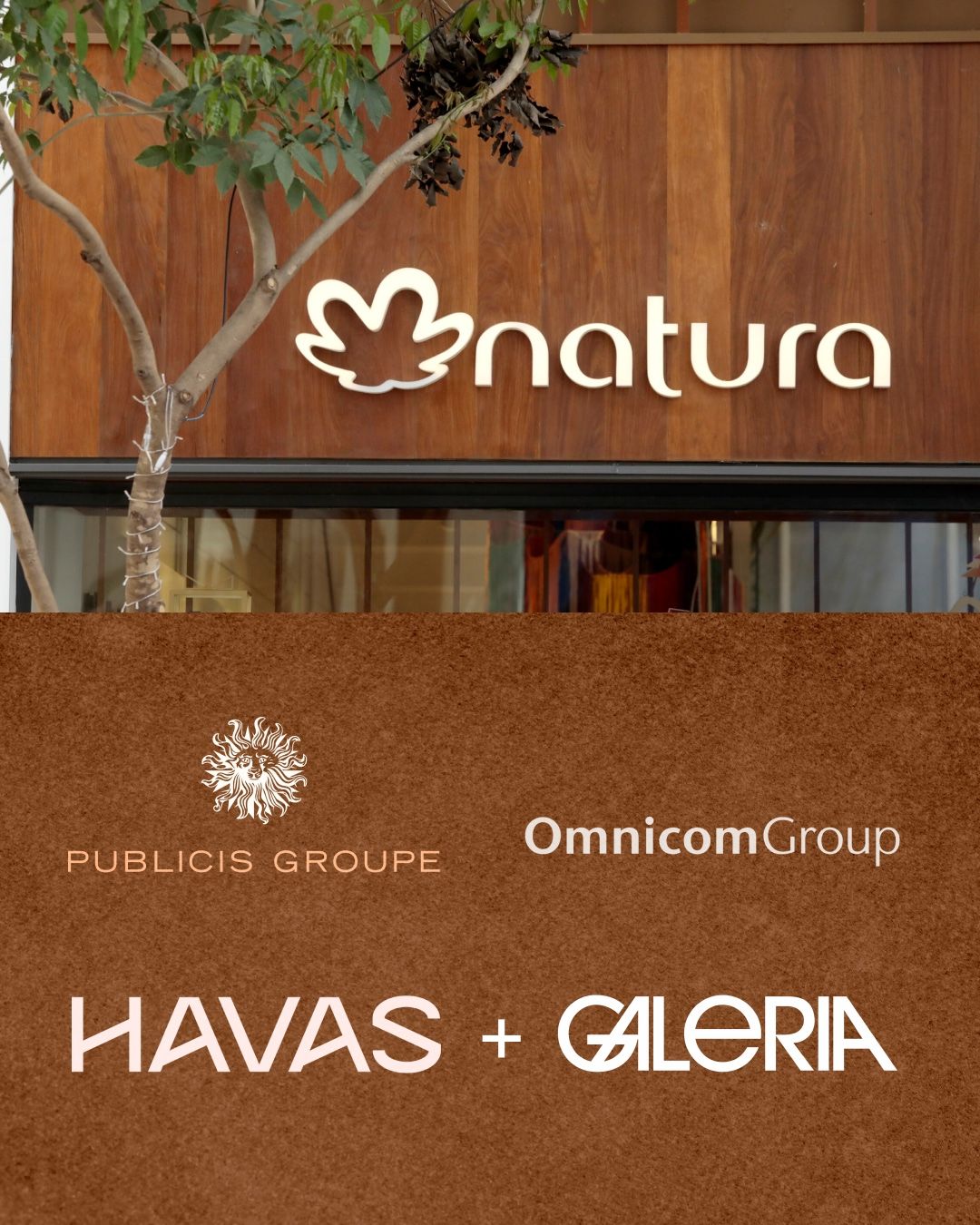
Natura put five holdings to compete for the same account. Not agencies. Holdings.
This isn’t just a different kind of competition.
It’s a reconfiguration of the growth model.
The old model
For decades, agencies grew as independent products.
→ Individual reputation (DPZ was DPZ, Africa was Africa)
→ Independent P&Ls and commercial autonomy
→ Differentiation based on creative talent, planning, awards, and campaigns
Growth meant winning more accounts.
Holdings were financial structures — not the product.
The new problem
→ Media became too complex for a single agency (programmatic, data, attribution, CRM)
→ Clients stopped buying campaigns and started buying results
→ Market pressure forced consolidation (Omnicom + IPG = US$26.4B, 4,000 layoffs)
→ AI compressed fees (25% less time → clients expect 25% lower costs)
Creativity became a commodity.
The value seat shifted from creative to engineering.
The new model
Natura put Natura + Avon together. A full stack.
And demanded a response at the holding level.
Finalists: WPP, Publicis, Omnicom.
What’s actually happening
1️⃣ Labels are dying
After the Omnicom–IPG merger, DDB, FCB, and MullenLowe are expected to disappear as standalone brands.
Everything consolidates into three networks: TBWA, BBDO, and McCann.
All brands carrying the “IPG” name are being retired.
At WPP, Ogilvy cut 700 employees in June 2025 — 5% of its workforce.
Why?
Holdings are investing less in creative leadership and more in technology that enables marketing at scale.
2️⃣ Offshoring is accelerating
Omnicom is building large campuses in India.
Publicis already employs 25,000 engineers there through Sapient.
Omnicom’s CEO was explicit:
“Hiring in India makes us cost-efficient.”
3️⃣ A monopoly is forming
A few groups now control the full arsenal.
Clients choose ecosystems, not agencies.
What changes
For holdings:
→ Ticket sizes increase 3–5x
→ Switching costs become extremely high
→ Cross-sell becomes structural
For agencies:
→ Autonomy disappears
→ They become cost centers
→ Many brands will cease to exist
What “growth” means has changed.
Before, agencies grew by winning accounts.
Now, holdings grow by combining technology stacks, offshoring, and the elimination of labels.
Consultancies, law firms, design studios — same dynamic.
Clients buy ecosystems, not isolated expertise.
Agencies became modules.
Holdings became the product.
Competing alone became too expensive.
Integration is the new game.
Dimitri Ribeiro
Human Resources
Share